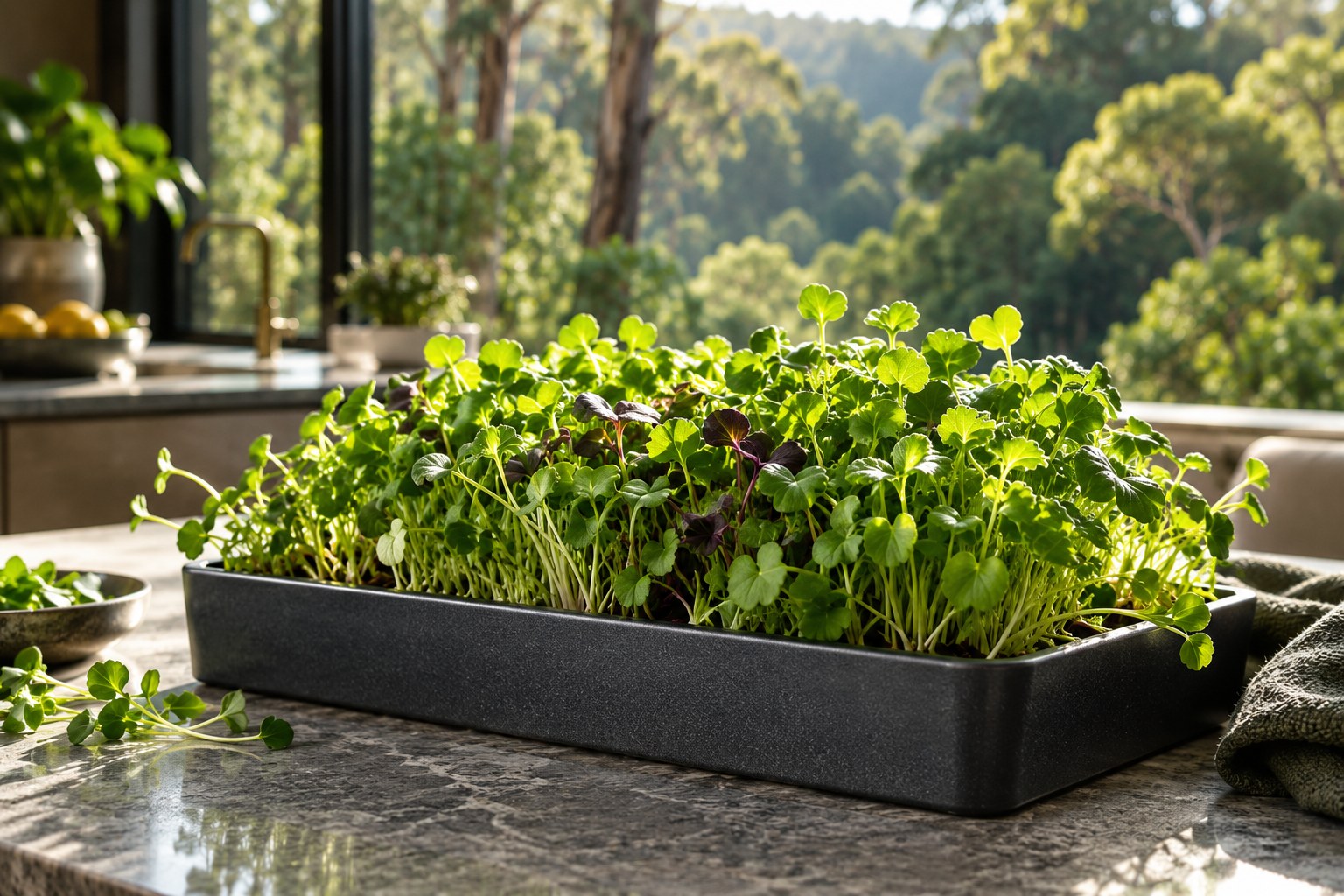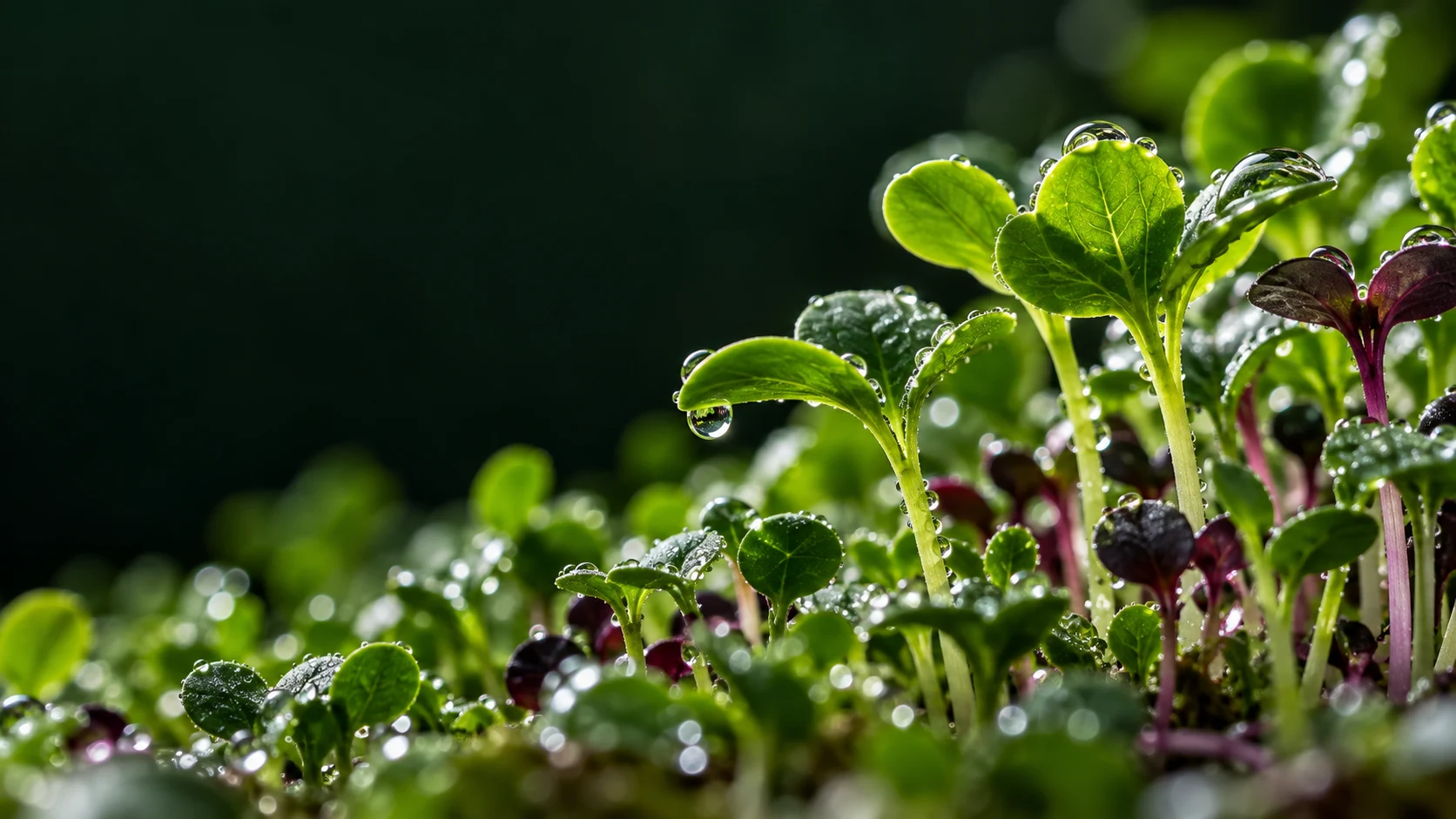
Check light, moisture, crowding and harvest stage together. Do not taste a crop to decide whether suspicious growth is safe.
Check when the problem started and which part of the tray is affected. Pale leaves after germination, stems leaning towards a window and collapsing wet patches need different responses.
Check when the symptoms appeared
Some seedlings look pale while covered during germination and develop colour after appropriate light exposure. Compare the crop with its variety’s growing directions. Persistent yellowing after establishment deserves a closer look at the setup.
A photo taken from the same angle each day helps distinguish slow development from an abrupt change. Include the tray edge or a ruler so apparent growth is not just a different camera distance.
Symptoms, possible causes and next steps
| Symptom | Questions to ask | Next action |
|---|---|---|
| Long stems leaning one way | Is light reaching one side only? | Assess the position and light coverage |
| Pale established leaves | Was the cover removed at the correct stage? | Review light and root-zone conditions |
| Dry, wilted patches | Did the medium dry unevenly? | Check moisture across the tray |
| Soft or collapsing wet patches | Is there waterlogging or spoilage? | Stop harvesting; isolate and discard suspect crop |
| Unexpected strong flavour in a sound crop | Is this variety naturally pungent or harvested later? | Review the variety and intended harvest stage |
Check growing conditions before adding fertiliser
More feed does not solve inadequate light, uneven watering or overcrowding. For short-cycle crops, follow the medium and seed instructions rather than adding a general garden fertiliser because the leaves look small.
If the method includes nutrients, keep the intended dilution and application record. Changing feed, light and seed loading together makes the next result harder to interpret.
Change one factor in the next crop
Pick one likely cause supported by your observations. For example, improve light coverage while keeping the same seed rate and medium. Record the change and compare a full growing cycle.
For flavour, compare known sound crops at their intended harvest stages and write a simple tasting note: mild, peppery, earthy or too fibrous for the planned meal. Treat an off odour, slime or abnormal deterioration as a handling problem, not a tasting experiment.