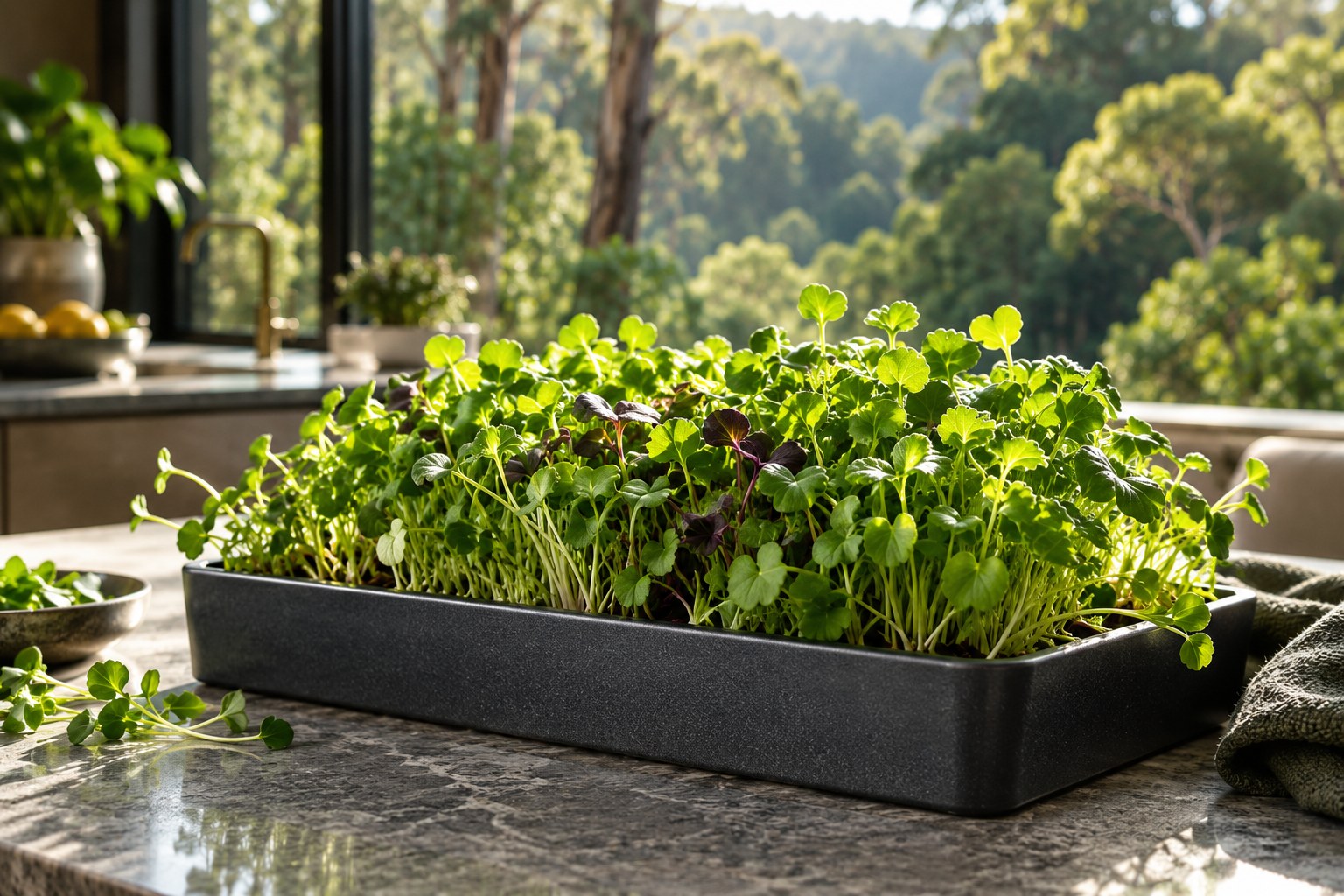
Use a chia-specific microgreen method and spread seed evenly on suitable prepared growing material. Do not assume a jar-sprouting routine, decorative growing kit or generic seed soak is suitable for an edible crop.
Chia seed forms a gel when wet, which makes it harder to spread evenly. Use seed intended for edible growing and instructions written for chia.
Choosing seed and growing materials
Check the seed’s identity and intended use, then confirm the growing surface is suitable for food production. Decorative terracotta figures and craft materials may not come with the information needed for an edible crop.
Before beginning, have the supplier’s directions for sowing, moisture, light and harvest. If those are absent, choose a better-documented edible growing product rather than guessing from a photograph.
Sowing gel-forming seed
Chia seed develops mucilage, the gel familiar from soaking chia for food. That changes handling: a wet clump is harder to distribute evenly than dry seed. Follow the intended method for applying seed and moisture instead of copying the soak used for peas.
Prepare a level surface and measure the portion before sowing. Work on a small area first so you can see whether seed is evenly distributed, rather than spreading a large crop in a hurry.
Checking moisture and emergence
Check whether moisture is even and whether shoots emerge across the surface. Record the day of emergence and any change in position. A gel coating does not by itself explain every unusual growth, so do not use it to dismiss signs of deterioration.
If a crop has an off smell, slime beyond the expected seed coating, suspected mould or collapse, stop using it for food. A spray test or photograph cannot certify its safety.
Harvesting and using chia microgreens
Dry chia seed nutrition figures do not describe the young leafy crop. Treat the harvest as a fresh ingredient and follow the handling guide, rather than advertising it as an equivalent serving of dry chia seed.
Record the amount you actually use and whether the growing method was manageable. If you are still learning basic tray care, a well-documented broccoli or radish crop may be an easier starting project.